
8 Worship Piano Patterns for Left Hand
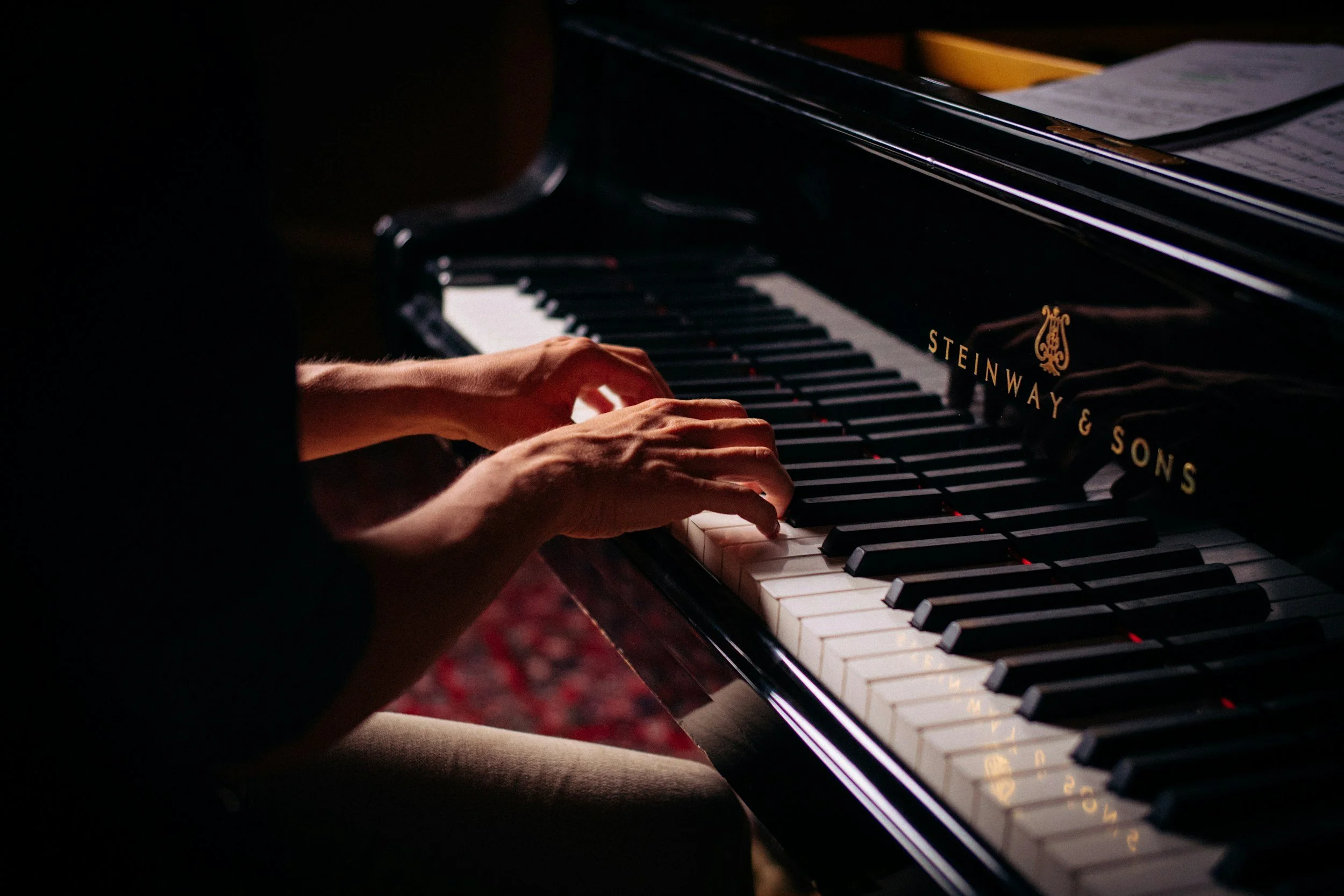
When you’re learning to play worship piano, it’s easy to focus almost entirely on what your right hand is doing. Chords, melodies, fills, and improvisation tend to get most of the attention.
But your left hand is what gives your playing foundation, movement, and momentum.
A strong left-hand pattern can make a simple chord progression sound full and intentional—even when your right hand is only playing basic chords. The key is learning a handful of patterns that you can use in different worship settings and adapt to different songs.
Here are 8 left-hand patterns for worship piano that every worship pianist should have in their toolkit.
In this video, I demonstrate each of these 8 patterns:
1. Single Notes
Play the root note of the chord, and hold it until the chord changes:

This simple pattern is what I recommend that all beginning pianists start with, in order to create a basic and simple rhythm for your playing.
2. Single Notes Repeated
This pattern is similar to the Single Notes (above) pattern. Simply play the root note on every beat.

3. 1-5-8 Arpeggio
For this pattern, we play the root, 5th, and octave of the chord. Be sure to watch the video to see the exact technique to make this pattern sound amazing!

4. 1-5-8-2-3 Pattern
This pattern is a variation of the 1-5-8 arpeggio (above). At the end of the arpeggio, we add the next two notes in the key. Be sure to check out the video for a fuller explanation of this pattern!

5. 5ths
For this pattern, we play the root and the 5th of the chord. This pattern works especially well when combined with other patterns, perhaps alternating it with the octaves or 1-5-8 pattern.

6. Octaves
For this pattern, we play two notes together, an octave apart:

7. Octaves with Repeated Top Note
For this pattern, we repeat the top note of the octave on every beat. This pattern allows you to use your left hand to build the song. Watch the video for a demonstration of how to use this pattern.

8. Syncopation
In this pattern, we play an octave but repeat the top note on the “and” of beat 2. Be sure to watch the video to hear this pattern in the context of a song.

How to Practice These Patterns
Don't try to memorize all eight patterns at once.
Instead, choose one pattern and practice it through a familiar four-chord progression.
For example:
C – G – Am – F
Start with single root notes. Then try root + fifth. Then octaves. Then the 1-5-8 arpeggio.
The goal isn't simply to memorize patterns. You want to develop the ability to hear a song and instinctively choose a left-hand pattern that fits the moment.
That's what makes worship piano accompaniment sound natural rather than mechanical.
Don't Forget the Right Hand
Your left hand and right hand need to work together.
If your right hand is already playing a lot of notes, your left hand usually doesn't need to be complicated. A simple root or octave may be enough.
On the other hand, if your right hand is playing simple chords, your left hand can provide more rhythmic and melodic movement.
Think of the two hands as having different jobs:
Left hand = foundation, rhythm, bass, movement
Right hand = harmony, melody, fills, expression
When those two parts work together, even a relatively simple arrangement can sound full and musical.
Start Simple, Then Add Complexity
One of the biggest mistakes worship pianists make is thinking that better playing means playing more notes.
It doesn't.
A simple left-hand pattern played with good timing and dynamics will usually sound much better than a complicated pattern that doesn't fit the song.
Start with the basic patterns:
Single root
Root + fifth
Octaves
1-5-8 arpeggio
Once those feel natural, begin experimenting with alternating patterns, walking bass lines, and more melodic movement.
The goal is to have enough patterns available that you can choose the right one for each moment of a worship song.
And remember: worship piano isn't about showing how much you can play. It's about using your musical ability to serve the song, support the congregation, and create space for worship.
Want to Learn More?
Want to keep growing as a worship pianist? The Worship Piano Membership gives you a clear, step-by-step path to playing with confidence and freedom—all from a heart of worship.